


Tips & Tricks for Discovering the Real Costa Rica: 25 Local Hacks (Transport, Food, Safety, Culture)
Do you want to do more than just “check off” destinations? Do you want to truly get to know the country—with authentic Pura Vida moments, great food, safe decisions, and without the typical tourist mistakes? Then this checklist is for you.
Here are 25 local hacks to help you plan smarter, travel more relaxed, and remain culturally respectful. The goal: less stress, more nature, deeper connections—and the feeling that you’ve truly experienced Costa Rica.
Quick-Link (Planning): If you are just starting and need a big-picture overview (types of travel, style, logistics), read this guide first: Travel Planning from Switzerland to Costa Rica
10 Tips for Planning & Timing (Including the “Green Season”)
- Plan by Experience, Not by “Must-See” Lists
Costa Rica isn’t a place for “5 locations in 7 days.” Think first: Do you want wildlife, beaches, hiking/volcanoes, or cultural encounters? Your route should follow your interests. - Fewer Stops = More Costa Rica
A local hack that is almost always true: 2–4 regions per trip is plenty. Every extra stop costs time (check-in/out, driving, detours) and takes away the magic of actually arriving. - Be Realistic About Driving Times (And Add a Buffer)
Google Maps is often optimistic in Costa Rica. Curves, rain, construction, and trucks make trips longer. Plan for a +30–50% buffer, and you’ll arrive much more relaxed. The best app for navigation here is Waze. - Start Early – Not Because You Have To, But Because It’s Better
Many highlights are best in the morning: animals are more active, it’s cooler, and there are fewer crowds. If you leave by 5 or 6 AM, your day will feel twice as long. - Use the “Green Season” Strategically
The green season (roughly May–Nov) doesn’t mean “constant rain.” Usually, it’s beautiful in the morning with showers in the afternoon. The perks: fewer crowds, better prices, and lush green nature. - Don’t Plan National Parks as a “Quick Stop”
Most parks are best enjoyed in the morning. Make them the main event of your day. Note: Some tickets/slots are limited and must be booked online in advance. - Hire Guides Where They Add Real Value
A good guide makes a massive difference at wildlife spots (you’ll see more and learn more). For simple hiking trails, you can often go solo. - Build in 1–2 “Buffer Days”
A buffer day isn’t a wasted day: it saves you during heavy rain, exhaustion, or when you find a place you simply don’t want to leave. - Decide Early: Rental Car, Shuttle, or Driver?
Your transport defines your rhythm. Rental car = freedom. Shuttle/Driver = relaxed and often more efficient. Mix-and-match is a great strategy. - Have a Plan A and a Plan B
Costa Rica rewards flexibility. Having a backup activity for rainy weather keeps your trip stress-free.
7 Tips for the Road (Car Rental & Driving)
- 4×4 Isn’t Always Mandatory – But Often Worth Its Weight in Gold
A normal car is fine for main routes. However, if you’re planning remote lodges, steep driveways, or rainy season routes, a 4×4 will save you a lot of stress. - Avoid Driving at Night
Driving at night is significantly more challenging (potholes, lack of markings, rain, animals). Local rule: Aim to arrive by late afternoon. - The Tank Rule: Never Drop Below Half
In rural areas, gas stations aren’t around every corner. Half-full is your safety net. - Pack “Car Basics”
Offline maps, a small headlamp, water & snacks, rain protection, and small change for parking. - Eat at “Sodas” for Authentic Food
Sodas are small local restaurants that are fresh and affordable. Order the Casado, Gallo Pinto, or Ceviche. - Cash + Card: A Mixed Strategy
Cards are widely accepted, but not everywhere. Keeping some cash (small bills) makes you flexible in rural spots. - Respect the Micro-Climates
Arenal can be warm, Monteverde cool, the Caribbean humid, and the Pacific hot. A light layer + a rain poncho is the ultimate hack.
5 Tips for Culture, Food & Etiquette
- “Pura Vida” Is More Than Just a Saying
It means relaxed, friendly, and solution-oriented. If something takes longer: smile, breathe, Pura Vida. - Greetings Matter
A short “Buenos días,” a thank you, and a smile go a long way in Costa Rica. - Tipping: Small but Appreciated
If the service is good, a small extra amount is always appreciated, even if a service charge is sometimes included. - Try Local Classics (And Ask for “Casero”)
Gallo Pinto (breakfast), Casado (lunch), and Olla de carne (traditional beef stew) are must-tries. - Sunday Rhythm
In smaller towns, Sunday is family time. Many things move slower; plan your shopping or transfers accordingly.
3 No-Gos (Wildlife, Respect, Safety)
- Wildlife No-Go: Feeding or Touching Animals
Even if they look “cute,” please don’t. It harms the animals and disrupts their natural behavior. - Respect No-Go: Drones or Loud Noise in Nature Zones
Animals react strongly to noise. In Costa Rica, the rule is: Observe, but do not disturb. - Safety No-Go: Leaving Valuables Visible
Whether in the car, at the beach, or in a restaurant: don’t leave things out in the open. Only take what you need.
Mini-Glossary: “Pura Vida” & Co.
- Pura Vida: Literally “pure life”—means “Hello,” “Thank you,” “You’re welcome,” or “It’s all good” depending on the context.
- Tico/Tica: A Costa Rican man/woman.
- Soda: A small, local restaurant.
- Casado: A typical plate (rice, beans, salad + meat/fish/veg).
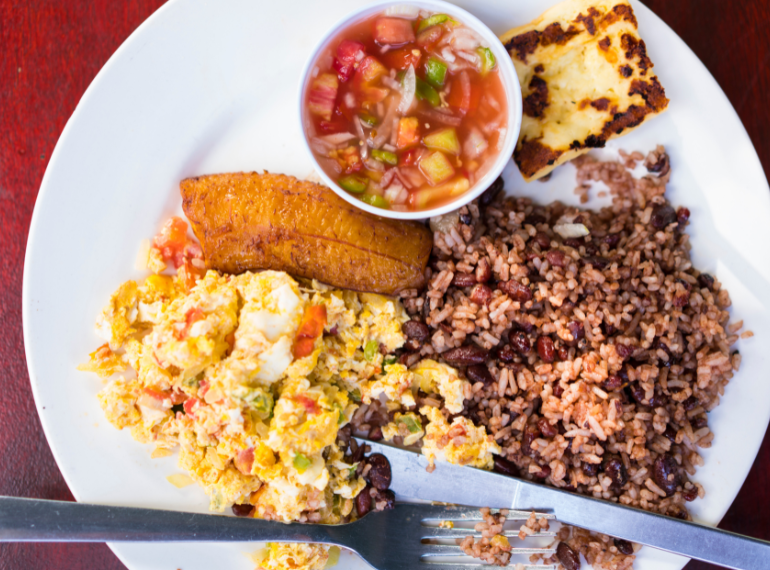
- Gallo Pinto: Rice and beans mix, the staple of breakfast.
Bonus: If you want us to build a route that fits your rhythm (minimal driving stress, great lodges, authentic experiences), contact us!
Comments are closed