


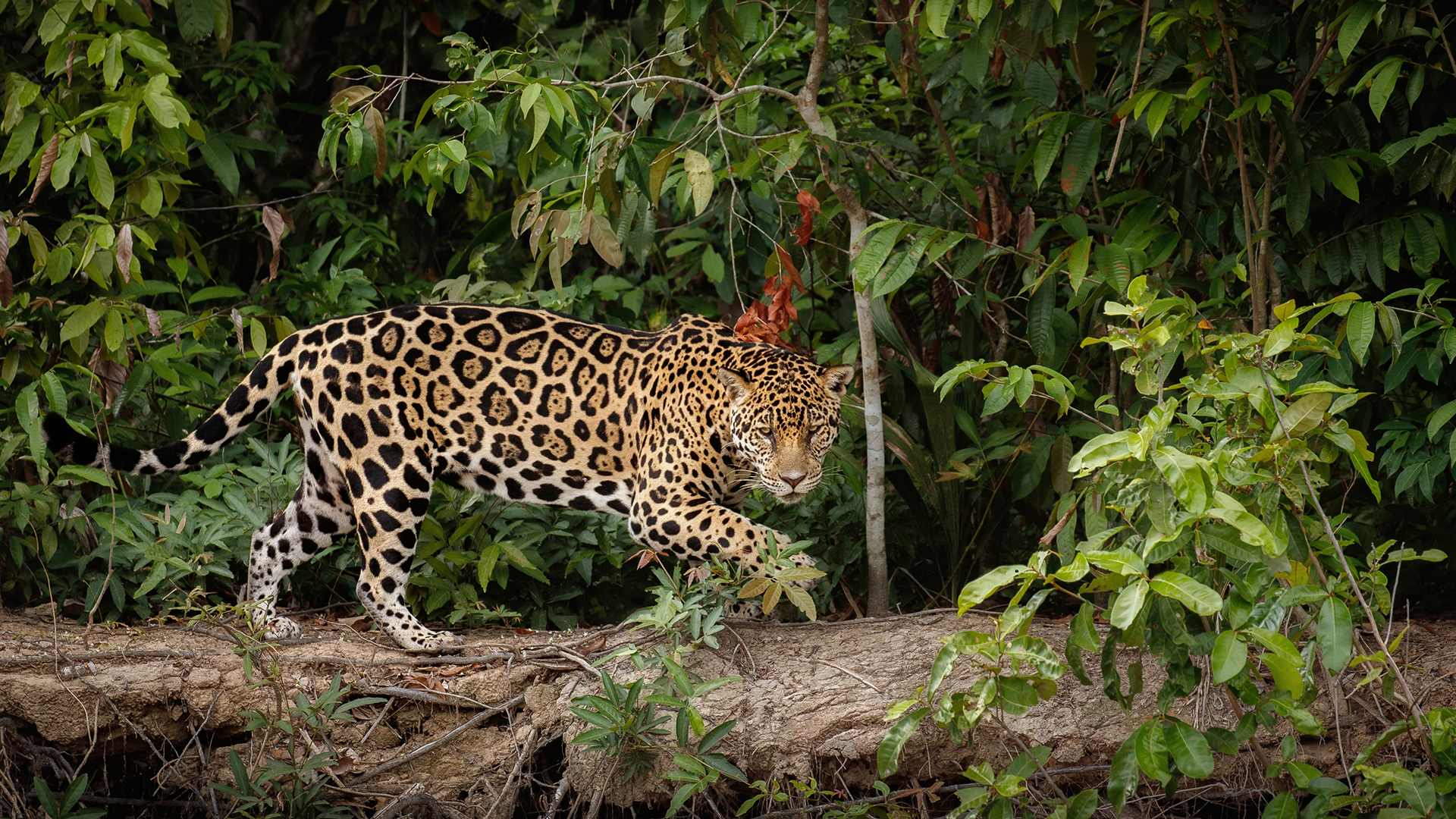
The Jaguar is Back – Why Corcovado is the Most Exciting Wildlife Destination of 2026
There are animals whose mere existence lends a place something magical. The jaguar is one of them. It is not loud, not frequently seen, not predictable. And that is precisely why its presence fundamentally transforms the experience of a national park: anyone travelling through Corcovado who knows this predator lives here sees the forest through entirely different eyes.
Twenty years ago, things were different. The jaguar had almost disappeared from the Osa Peninsula – poaching, habitat loss and conflicts with cattle farmers had reduced the population to just a few dozen individuals. What has happened since then is not something to be taken for granted. It is the result of years of dedicated work: anti-poaching patrols, habitat restoration and close collaboration with communities around San Juan and Rancho Quemado.
What Sets Corcovado Apart from Other National Parks
Corcovado National Park on the Osa Peninsula is considered one of the most biodiverse areas on Earth. National Geographic once called it ‘the most biologically intense place on the planet’ – and that description is no exaggeration. Within an area smaller than many Swiss cantons, four species of monkey, tapirs, pumas, anacondas, harpy eagles and more than 400 bird species make their home.
What distinguishes the park from other protected areas in Costa Rica is its inaccessibility. Entry into the most sensitive zones is permitted only with certified guides and approved routes. Visitor numbers are strictly limited – depending on the sector, only around 100 people per day or even fewer are allowed in. There are no paved paths, no car park at the entrance, no visitor centre with a gift shop.
The Key Zones and What to Expect
La Sirena is the heart of the park – a research station reachable by boat or small plane, which serves as the starting point for the dense rainforest areas in the interior. Tapir sightings are relatively common here, and at night you hear what you cannot see during the day. Los Patos is the entrance from inland, ideal for multi-day trekking tours. San Pedrillo in the north offers a breathtaking combination of coastline and rainforest.
Spotting a Jaguar – What You Really Need to Know
The honest answer: a jaguar sighting is never guaranteed. That is part of the truth of genuine nature tourism, and any agency that promises otherwise is making false claims. What can be said honestly: Corcovado has the highest jaguar density in Costa Rica. Anyone who spends three to four days in the park, is active in the early morning and at dusk, and works with an experienced local guide has a realistic chance.
| Tip: For travellers from the UK, USA, Canada and Australia: anyone who truly wants to experience Corcovado should plan at least three nights near the park. A day trip provides impressions – but not the feeling of having really been inside. |
Beyond the Jaguar: What Else Corcovado Has to Offer
Tapirs are the silent giants of the forest – up to 300 kilograms, nocturnal, and possessed of a shyness that belies their size. In Corcovado they are regularly seen, particularly near water sources. Scarlet macaws fly in pairs and can be heard from a distance at dawn. Four species of monkey animate the canopy. Humpback whales gather between July and October to calve in the waters off Bahía Drake.
Ecotourism as a Conservation Strategy – Not Just Marketing
Costa Rica is one of the few countries in the world that has successfully reforested after massive deforestation in the 1980s. Today more than 25 percent of the country’s land area is protected. This is largely funded by tourism: park entry fees, guide fees, local lodges – the money stays in the region and creates incentives to preserve forest rather than clear it.
Practical Information for Trip Planning
Best Time to Visit Corcovado
The dry season from December to April is ideal for hiking in the park: dry trails, less mud, better visibility. In the rainy season (May to November) the greenery of the vegetation reaches its peak – particularly beautiful for photographers. Important note: Corcovado National Park is generally open year-round. However, there are planned closures or restricted access in October, particularly around the Sirena ranger station.
Getting There and Logistics
Corcovado is best reached by small plane to Puerto Jiménez or Bahía Drake – the flight from San José takes around 45 minutes and is itself an experience. From there, boats and 4×4 vehicles take over. We organise complete transfers and coordinate arrival, park entry fees and guide fees.
What to Pack
Good hiking boots (waterproof), quick-drying clothing in muted colours, a light rain jacket, insect repellent without DEET, sunscreen, a dry bag, a reusable water bottle and binoculars. Those who want to photograph should bring a camera with a long lens.
FAQ
Can I really see a jaguar?
Jaguars are elusive solitary animals and a sighting is never guaranteed. However, Corcovado has the highest jaguar density in Costa Rica, and an experienced guide significantly increases your chances. Even without a jaguar sighting, Corcovado is one of the most remarkable nature experiences in Central America.
How long should I plan for Corcovado?
At least three nights near the park, ideally including one full day in the interior. Those who want to explore the Osa Peninsula thoroughly should plan four to five nights.
Is Corcovado suitable for families with children?
Yes, absolutely, with the right routes and guides. There are family-friendly trails and lodges. For children under 8, we recommend the more accessible areas around the park’s edges.
What does a visit to Corcovado cost?
The park entry fee is currently USD 18 per person per day. A multi-day package on the Osa Peninsula typically costs around USD 1,550 for 2 people, depending on accommodation category, logistics and programme.
→ Explore Costa Rica now: dahlercostarica.com/costa-rica/
Comments are closed