


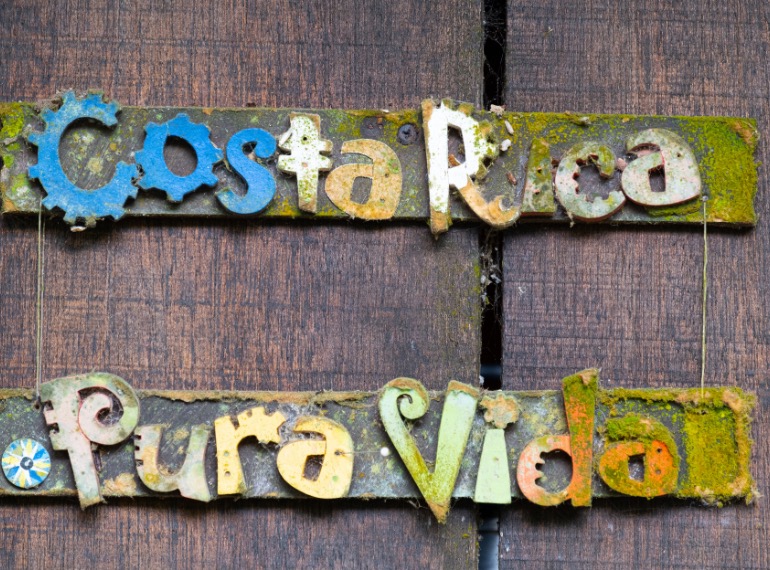
The country that abolished its army — and rewrote its own destiny
1 December 1948. One man with a hammer. And a decision no country had ever made before.
In a world that had just lived through the Second World War and where every nation was arming itself, a small Central American country did the opposite: it abolished its military. Not because of military defeat. Not under external pressure. By free choice — marked by a hammer blow against a barracks wall.
That country is Costa Rica. And that decision changed everything: how the country invests, how it protects its nature, how it educates its citizens — and why it is today one of the safest, most stable and ecologically most advanced nations in the world.
For Swiss travellers seeking, in a time of growing global uncertainty, a place that radiates calm, safety and genuine foresight, Costa Rica is more than a holiday destination. It is a way of thinking.
| 1948Military abolished | 77Years of peace | 25%Territory protected | 98%Renewable energy |
Why does Costa Rica have no military? — The story
[INTERN: IMAGE 2 here — Museo Nacional de Costa Rica (former Cuartel Bellavista)]
It wasn’t a long peace process. It was a decision — made at the end of a short civil war, by a man who could have ruled by force and chose instead to open his hands.
In March 1948, a brief but bloody civil war broke out in Costa Rica, triggered by the annulment of a presidential election won by Otilio Ulate Blanco. José Figueres Ferrer — farmer, intellectual, visionary — led the opposition and prevailed in 44 days.
As victor, he could have had everything. He chose the opposite. On 1 December 1948, he gathered students, diplomats and public figures at the Cuartel Bellavista and drove a hammer into a wall. Symbolically. Unambiguously. Irreversibly.
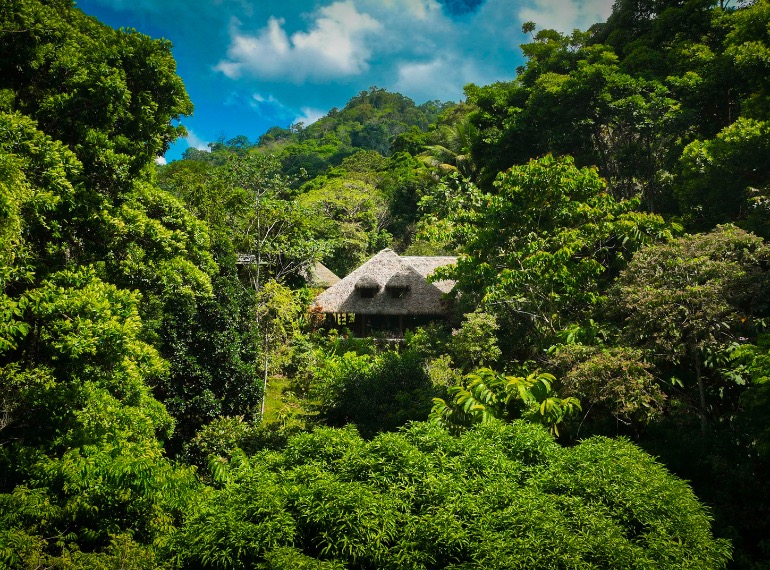
| “Las victorias militares por sí solas valen poco. Lo que sobre ellas se construye es lo que importa.” — José Figueres Ferrer, 1949 | Translation: “Military victories alone count for little. What you build on them — that is what matters.” |
Decreto N° 749 formally dissolved the military. The 1949 Constitution enshrined the decision in Article 12: “The military as a permanent institution is prohibited.” The Cuartel Bellavista was handed to the Ministry of Education — and is today the Museo Nacional de Costa Rica.
What Costa Rica did with the money — instead of weapons
Education became the national priority. By the early 1950s, Costa Rica already had more schools than barracks. Today the literacy rate exceeds 97%. The school system is public, free and compulsory.
The healthcare system built around the Caja Costarricense del Seguro Social became one of the most advanced in Central America. By the 1970s, Costa Rica’s life expectancy was comparable to developed nations. Without a military. With the freed-up budget.
In 1949, the Tribunal Supremo de Elecciones was established — an independent electoral authority that still guarantees Costa Rica’s reputation as a stable democracy today.
| According to a University of Costa Rica study, without the abolition of the military, the country’s GDP would have reached barely half of its current value. |
Costa Rica and environmental protection — an equally bold story
In 1969, Costa Rica passed its first Ley Forestal — the Forestry Law, one of the first in Latin America. It created the legal foundation for the national parks system. Today, over 25% of the national territory is under official protection.
In 1995, the Ley Orgánica del Ambiente — a comprehensive environmental framework law — permanently anchored biodiversity protection and ecological responsibility. In 1994, the right to a healthy environment was incorporated into the Constitution.
On just 0.03% of the Earth’s land surface, Costa Rica is home to around 6% of global biodiversity. Over 53% of the territory is covered by forest. 98% of electricity comes from renewable sources.
Is Costa Rica a safe travel destination? — The honest answer
Costa Rica has not been involved in any armed conflict for more than 75 years. It has no active territorial disputes, no paramilitary groups, no political instability. Democracy works — uninterrupted since 1949, with free and uncontested elections.
Like any society, Costa Rica has its challenges: crime in certain neighbourhoods of San José, petty theft as in any tourist country. But structural violence, military risks or political unrest — these are not part of the Costa Rican reality.
| Costa Rica is the only country in Central America classified as a full democracy without interruption for more than 75 years. The Economist Intelligence Unit Democracy Index 2023 ranks Costa Rica among the most stable democracies in Latin America. |
What all of this has to do with your trip
When you travel to Costa Rica, you enter a country that has invested for generations in education rather than weapons. The nature that overwhelms you is protected by laws older than many European environmental laws. You feel it — not as abstraction, but as a concrete sense that something here is right.
Swiss Tropical Tourism was founded by the Dähler family — Swiss roots, Costa Rican home for decades. They know the history of this country from the inside. And they share it, when someone is willing to listen.
| Travelling to Costa Rica today means stepping into a country that answered, decades ago, questions the world is still asking. |
Costa Rica and Switzerland — more in common than you might think
Switzerland has been neutral for centuries. Costa Rica has been without a military since 1948. Both decided that security doesn’t come from weapons, but from stability, institutions and prosperity. Both are small, both are green, and both exert a disproportionate global influence on democracy, sustainability and peace.
The Dähler family — Swiss roots, Costa Rican home — embodies this connection better than anyone. When Swiss Tropical Tourism organises a trip, it isn’t a tourist transaction. It’s an invitation to understand a country that deserves to be understood.
Frequently asked questions — Costa Rica, peace and safe travel
❓ Why does Costa Rica have no military?
Costa Rica abolished its military on 1 December 1948, through a decision by President José Figueres Ferrer following the short civil war. He chose to invest the freed resources in education, healthcare and social development. In 1949, the prohibition of a permanent military was enshrined in Article 12 of the new Constitution.
❓ When was the military abolished in Costa Rica?
The official dissolution took place on 1 December 1948 through Decreto N° 749. The symbolic moment was marked by President Figueres striking a wall of the Cuartel Bellavista (now Museo Nacional) with a hammer. The 1949 Constitution made the abolition permanent and constitutionally binding.
❓ Is Costa Rica a safe travel destination for tourists?
Yes. Costa Rica is one of the most stable and safest countries in Latin America. It has not been involved in any armed conflict for more than 75 years, has a functioning democracy and is free from military risks or political instability.
❓ What pioneering environmental laws has Costa Rica passed?
Costa Rica passed its first Ley Forestal (Forestry Law) in 1969, among the first in Latin America. In 1994, the right to a healthy environment was incorporated into the Constitution. In 1995, the Ley Orgánica del Ambiente followed. Today, over 25% of the national territory is under official protection.
❓ What percentage of electricity in Costa Rica comes from renewable sources?
Around 98% of Costa Rica’s electricity comes from renewable sources — primarily hydropower, wind, geothermal and solar. The country has several times powered its entire annual consumption at 100% renewable energy.
❓ Why is Costa Rica an aspirational destination for Swiss travellers?
Costa Rica and Switzerland share fundamental values: neutrality, stability, investment in people rather than armaments, nature protection and democratic institutions. Swiss Tropical Tourism, founded by the Dähler family who have lived in Costa Rica for decades, offers direct, authentic access to this country.
Comments are closed